Showing posts with label Rome. Show all posts

Saturday, March 28, 2015

The Reincarnationist

The Reincarnationist (Reincarnationist, #1)The Reincarnationist by M.J. Rose
My rating: 2 of 5 stars

Sum it up in a sentence (or two): Josh is pretty sure he used to be Julius, but wants proof. He goes looking for it in Rome and finds a lot of trouble.

First thoughts: Right away, I was super intrigued with this book. The Rome setting definitely interested me (and the Roman history was fun to revisit), but the characters and concept showed lots of promise too. I mean, it's reincarnation, how can it not be interesting?

A tale of two...or three stories: So at first it was just Josh Ryder in present day NY/Rome and Julius in ancient Rome. Then a few more characters get introduced and we've got Joshua as Percy in a New York of the past, plus Rachel, Alex, and Harrison in present New York. Things get a little confusing.

Favorite quote: "It's a gift to see into the depths of grief, because only when you realize that someone can be in that much pain and still function, speak civilly, shake your hand and tell you how nice it is to meet you, do you understand why you can't ever give in or give up. There's always another chance, another day. That's the miracle of the human spirit." -Josh's dad, p 374

Final thoughts: So...this just kinda ended. I guess it's part of a series, but I'd like my stories to have a conclusion (even a cliffhanger), not just end. That's a bummer. Points for Rome/Roman history, interesting concept, and characters I want to care about, but the follow through isn't there.


View all my reviews

Thursday, July 25, 2013

As the Romans Do: The Book

Remember back in January, when I started my end-of-the-month Happy lists? I mentioned one of Alan Epstein's other books, As the Romans Do. Thanks to the miracle of InterLibrary Loan, I have that book in my (borrowed) possession!

Now I'm reminiscing vicariously through Epstein's experience of living in Rome with his family. He says in the introduction that travelers might leave Rome, but Rome never truly leaves them, and I fully agree. One could make that argument for many travel destinations, but for some reason it feels truest with Rome. It's the history of the city--no other city has experienced all that Rome has experienced.

Recently, I've been thinking about my life in Rome. Maybe it's because I'm reading this book, maybe it's my travel bug acting up (Have no fear, little bug, my next trip is around the corner!). My neighbor smokes a cigarette every night at about midnight, and for those few minutes I can close my eyes and pretend I'm back on Via Pascarella. Cigarette smoke mixes with warm summer air, cooling after dusk, and the train, the traffic, the tourists, and the ambulances all compete for my auditory attention.

Epstein catalogs life as Roman from every angle: money and business, public transportation, Roman women, monuments, statues, and fountains, family, public service strikes, politics, daily schedules, coffee, technology, tourists, immigrants, and natives, and of course, food. Roman values and philosophies fill the pages: don't worry, things will happen as they should, family and friends are more important than money, drink a coffee, eat, eat, eat. It's clear he lived in Rome, and what's striking is that even though he lived there in the late 90s and I visited in 2009, I could relate to almost everything he wrote. It's called the Eternal City for a reason.

If you can find this book, I recommend it. I have a huge bias, yes, but many chapters read like one of my blog posts, just a bit longer. As I read, I wonder why I couldn't have found it sooner and just reviewed it chapter by chapter while I was in Rome.

Saturday, March 23, 2013

Estoy aqui

I've been in Uruguay for just over 12 hours and I've already taken two naps. This country is great.

I hope to see more of the city/Bailey's neighborhood in the next few days. So far, many things remind me of Rome: small streets, red Coca Cola tables and chairs set up outside of food shops, the tiny grocery store, and not understanding much of anything. Bailey's apartment is similar to the one I lived in in Rome as well, right down to the Chinese lantern light covers.

Best of all: I'm wearing a tank top and I'm comfortable!

Wednesday, September 7, 2011

Eternal City, Second City

Remember how obsessed I was with ancient Roman history when I studied abroad? (Refresh your memory in my archived posts.) Brit is probably just as obsessed with Chicago history and has quickly turned me on to it. She's got me reading books like Sin in the Second City by Karen Abbott and it's uncanny how similar the cities actually are.

Chicago is notorious for its crime and corruption, and much like Rome it has many mob connections. Both cities have rich traditions of underworlds, secret groups, and dark sides exploited in books and movies. In Rome, "que bordello!" is uttered to comment on something being wild (literally, a whorehouse). Chicago was home to one of the most illustrious bordellos in America at one point.

The Eternal City and the Second City of course share less corrupt things in common as well: an intense passion for food, varied and diverse neighborhoods, sports rivalries (Lazio v Roma soccer/Cubs v White Sox baseball), and funky street smells (hot garbage, piss, dog) for example.

My apartment reminds me of living in Rome as well. I stand on my front porch and watch traffic on my one-way street, I hear many conversations from the building next to me through my window, my downstairs neighbors are always smoking, and I'm only a little way from the train into or out of the city. My neighborhood is residential and has an old working-class feel. It makes me want to write a lot.

The biggest difference between my two lives is most likely having fairly efficient public transportation and streets on the grid. It's far less difficult to get lost or be late here. Sad day.

Friday, June 11, 2010

Skyscraper rises in Eternal City

The one thing Rome doesn't have (yet): a skyscraper. Here is the proposed plan for Torre Eurosky:

Monday, February 15, 2010

Mid-February Short List

--Neve a Roma! Snow in Rome! For the first time in essentially 24 years, Rome was hit with the fluffy stuff, causing traffic to back up. Am I sorry I missed it? Maybe the photo ops, but seeing as I didn't bring a winter jacket with me to Rome I'm glad we just got rain last winter.

--We like to think that choosing between ambition and love is a fairly recent struggle, but Margaret Sullavan and James Stewart show us otherwise in their 1936 film Next Time We Love. Deciding to pursue a career versus a relationship or dealing with the troubles of juggling both seems to be a timeless motif, and one that Ms. Sullavan and my man Jimmy portray flawlessly.

Mountains Beyond Mountains: The Quest of Dr. Paul Farmer, a Man Who Would Cure the World (Random House Reader's Circle)
--Our current topic in Poverty and Social Justice is health care and the idea of preferential option for the poor, an aspect of Catholic social teaching adopted by liberation theologists. This theology greatly influenced Paul Farmer, an American doctor and anthropologist who co-founded Partners in Health, a worldwide health organization striving to provide health care for those in poverty. We are reading Tracy Kidder's book Mountains Beyond Mountains: The Quest of Dr. Paul Farmer, a Man Who Would Cure the World, which narrates Farmer's background and life, especially in Haiti, Peru and Russia.

I encourage everyone to read this book, especially in light of the earthquake in Haiti, which really brought the country's needs and deficiencies to the surface.

All About Love: New Visions
--And moving on to books that are not required for any classes, I've also started reading All About Love: New Visions by bell hooks thanks to Drew, who suggested I read it. I'm only in the first chapter, but I like that she doesn't assume the reader knows anything--she starts with a fresh definition of love and looks at it through her contemporary culture critic lens.

Thursday, February 11, 2010

Fiori di Zucca: How Rome does Cheese Curds


[Written for my Film and Lit course. The assignment was to describe the best meal we've ever eaten...I may get a little sentimental with this.]

"For all sorts of fries the Romans are justly celebrated. The sweet olive-oil, which takes the place of our butter and lard, makes the fry light, delicate, and of a beautiful golden color..." [William Wetmore Story, Roba di Roma]

“Should we get an appetizer?” Ro asks. My roommates and I are crowded around a table in one of Rome’s smaller trattorie. It’s one of our last meals here before we fly back to America.

“Let’s get supplĂ­,” Shannon suggests. Marina and I nod. The cheese and marinara stuffed rice balls have been a favorite Roman treat.

Ro looks over the menu. “They don’t have supplĂ­, but there’s fiori di zucca fritti.”

“Flowers of zucchini…fried?” I guess. My Italian has improved in these four months.

Ro nods. “Fried zucchini blossoms. They’re so good.” Thanks to her highly traditional Italian-American upbringing, Ro is our go-to for questions of language and culture.

We decide to try the fiori di zucca along with some vino for starters and settle in to our cozy corner table. The intimate yellow lighting makes everyone’s skin glow and as varied groups of Romans and tourists squeeze in from the chilly May night, I lose track of what language I hear and speak.

When we fear we will faint if we don’t eat, a cameriera brings a steaming plate of blossoms. The hot, salty aroma of olive oil warms the air around our table and for a second I’m at home, in the Bingo tent at the fair, eating cheese curds. With a “Prego,” from our cameriera, I’m back in Rome and aching to compare these stuffed blossoms to the curds I’m used to.

We all grab one and quickly transfer them to our plates: they are too hot to eat, but our hunger has tripled by seeing and smelling them. Golden brown on the outside and the size of, well, a flower, the fiori di zucca glisten with salt. Under the batter, the bright orange blossoms fade into green. With forks and knives, we slice them open to reveal fresh buffalo mozzarella.

We can’t wait any longer: still using our forks, halves of fiori go in our mouths and immediately we remember why leaving Rome is going to be so difficult. First, my teeth recognize the crunch of the batter, followed by the firm yet tender give of the cheese. A hint of a squeak tickles my tongue. The actual blossom has the mild sweetness of a zucchini and its gentle flavor serves as the dish’s simple foundation as undertones of salty mozzarella and smooth olive oil dance around my mouth. I let the blossom linger, not wanting the taste to end. When it does, I drink some water to cool my mouth in anticipation of the second half of the blossom. Is it possible that this half tastes even better? Ah, si, buon appetito!

Wednesday, January 13, 2010

year one

I can't remember if I've mentioned this yet (and I'm too lazy to check) but it's now been exactly one year since I first stepped foot in Rome, the city that inspired this blog.

Wow.

And to commemorate that, I decided today to take out my Roma journal and read through it and pick up where I left off in Livy's The Early History of Rome. Next I'm going to find Eat, Pray, Love and read that again.

I've also started putting together all of my blogging/journaling/added embellishments from studying abroad into one giant...thing. I haven't decided yet what it's going to be, except hopefully interesting and enjoyable.

Tuesday, September 29, 2009

reminiscing

Technically the writing center is not open yet (thanks to some budget miscommunications we had to rearrange hours) but I figured if I pretended like I still had to open this morning I might actually get some work done. Not that I have a ton of work to do or anything, I just always feel pressured when I have some sort of unfinished work. This week and a half before long weekend has always been busy for me and this year is no different: I need to write a creative piece to submit to Graphos by Thursday, I have an art exam on Thursday, two papers due on Friday and another exam on Tuesday.

I still can't seem to get totally into school mode, though. None of these papers or quizzes seem real. I'll get them done, they'll be fine papers, but a part of me keeps thinking: the world won't end if I just don't write them. In the grand scheme of things, these papers and exams mean not a lot. It's not that I'm not learning anything in class or excited by what I'm learning--my classes are interesting. I guess I just feel really sheltered here at school. I'm in a bubble where nothing can hurt me and there is no danger.

Most likely I'm just thrown off balance after so many months of constant stimulation. Now it rains outside and I vaguely remember a time when I lived in a city where it always rained. I see a map of the US and my eyes are drawn to the southeastern region. Are people still riding the tram in Rome? How are the waves today in North Myrtle? Did I actually live in those places or were the last eight months of my life a dream?

And then I think it's just way too early to be thinking these things...I think I'll just listen to some Italian music and look at my pictures some more.

Sunday, May 17, 2009

HOME!

We finally made it back. Our flight from Rome to Munich left late, and we thought we were going to miss our connecting flight to Chicago but when we finally got into Munich, we learned that that flight was delayed. So we hurried up to wait another two hours before our transatlantic flight left. The flight from Munich to Chicago was nice--I watched Slumdog Millionaire, part of Inkheart, and fell asleep to Radio Italia. Unfortunately because that flight was delayed, we did miss our connecting flight from Chicago to Central Wisconsin. We were so close to home but had to spend the night in Chicago and catch an early morning flight the next day.

And then after a very turbulent but brief flight, we were home. All I could think when we were flying in was how far apart everything was. So much space between the houses, huge roads, giant vehicles. The weather is a little chillier here than what I am used to in Rome but my bed is just as comfortable as I imagined. :)

I am slowly getting over my jet lag--though I am pretty sure I will be waking up early in the morning for a bit. Right now it is 2 in the afternoon but my body feels like it is 8 PM.

Yesterday I made the family come with me to see Angels and Demons, the new Ron Howard film based on the novel by Dan Brown. It is set in Rome so Dad (who chose to sit next to me) was entertained the entire time with me poking him to say, "I was just there three days ago!"

Tuesday, April 21, 2009

Happy Birthday....Roma!

That's right, today is Rome's birthday. It turned 2,762 years old today and is celebrating with historical reenactments, concerts, fireworks and free museum entrances. The free museums are actually a part of Italy's Culture Week this week and we took advantage of it during my art history class today when we visited Trajan's Markets. I guess you could compare Rome's birthday to our Independence Day since they both celebrate the creation of a people.

It's funny to think, though, that Rome has been here (according to tradition) nearly 3,000 years and America just over 230 years. We're babies!

Update on the papers: one done, two to go.

Friday, April 10, 2009

Good Friday

Today was Good Friday, and in Rome that's a big deal. Tourists have been flooding Rome ever since Holy Week started last Sunday and tonight I saw a good number of them at the annual Way of the Cross (Via Crucis) procession at the Colosseum.

The theme this year was prayer for the persecution of Christians in India, but there was also a lot of focus on the earthquake victims. Even though there is traditionally no mass held on Good Friday, they made an exception this year for the funeral of the victims.

The Way of the Cross started tonight at 9:15 and I got back to my apartment at 12:15--but it didn't seem like it took that long. When I got to the Colosseum I squeezed my way through the crowd trying to find a place that gave me a good view but wasn't too crowded. As I was doing this, I saw two people faint--the crowd was so dense and the air was stifling at times.

Most of the procession was in Italian, but when they announced each station they did it in Italian, French, English, German, Spanish and Portuguese. At the end of each station the crowd said an Our Father (in Italian). At the very end, Pope Benedict XVI gave an address to which the crowd responded with much applause.

The amount of people there was unbelievable--priests and nuns, families, old people, young people. And people speaking all sorts of languages. The atmosphere was somber, yet charged. As everyone was leaving I found myself in front of some girls with British accents. One of them was talking on the phone and I overheard her say, "Well, it was nearly two hours and there were no fireworks, but it was cool." I'm not sure exactly what she was expecting at a ceremony held on the day Jesus was nailed to the cross...

Monday, April 6, 2009

Happy Birthday Raphael!

Today marks another important date in Italian/Roman history as both the birth and death date of the painter Raphael. When I researched Raphael to see what works of his I could find in Rome, I was pleased to see I have already seen most of them.

One of the first things I saw in Rome, the Pantheon, houses the tomb of Raphael, who died in Rome in 1520.

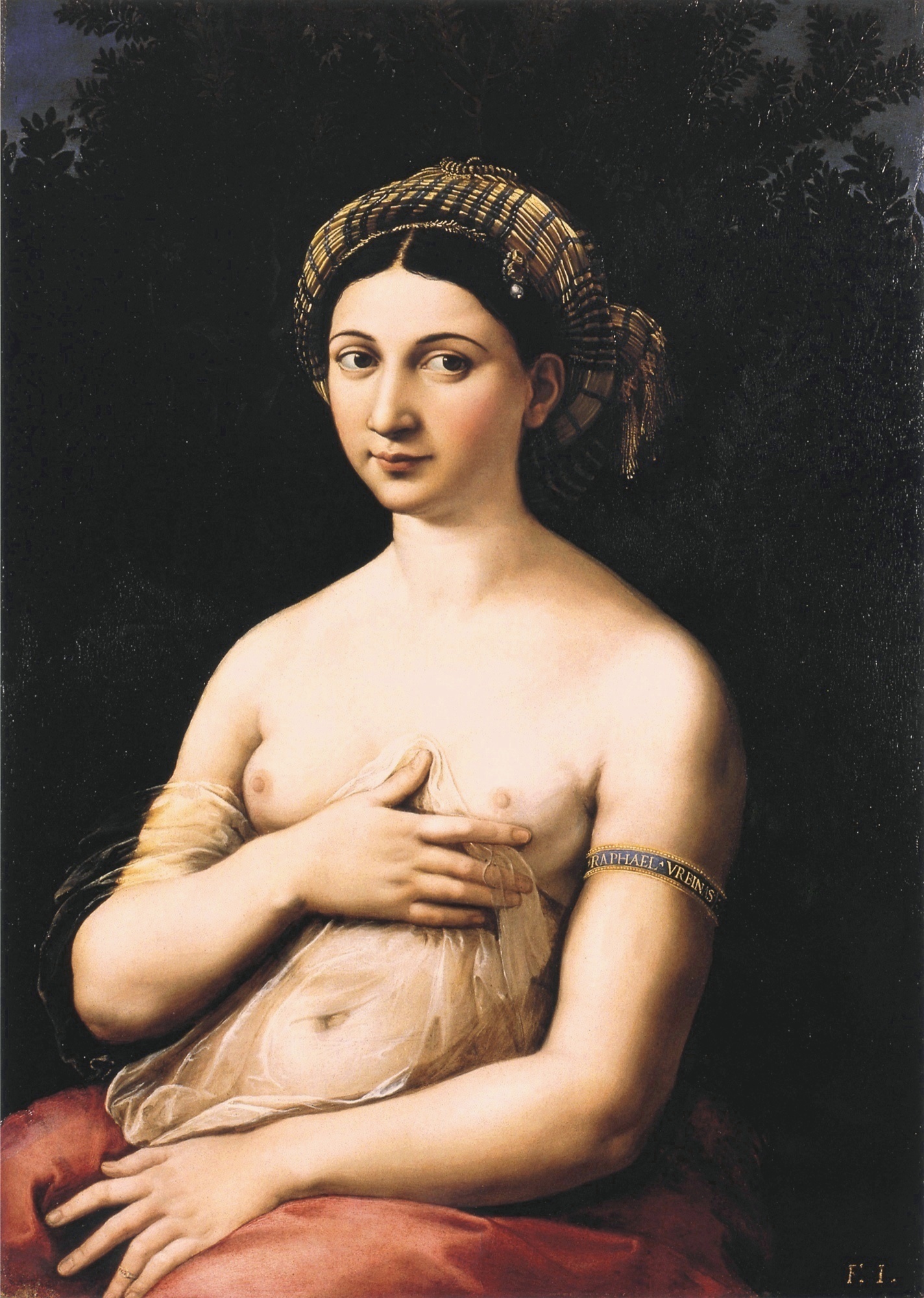
The Villa Borghese houses a few portraits and the Palazzo Barberini houses "La Fornarina" (the bakers daughter), a portrait of Raphael's lover and a model for many of his portraits. Raphael was also the one to suggest the "Latin Cross" design for St. Peter's.

Still on my list of things to do in Rome is see the Vatican Museum, where one can walk through the Raphael Rooms and admire other paintings by Raphael. He also painted the frescoes in the Villa Farnesina.

It's just the beginning of an eventful week in Rome: yesterday was the start of Holy Week with Palm Sunday and the Pope's blessing in St. Peter's Square and today saw the biggest earthquake to hit Italy since 2002 plus the anniversary of Raphael's death and birth. Passover begins at sundown on Wednesday and continues on Thurdsday--and even though Rome is traditionally seen as Roman Catholic, there is an area called the Jewish ghetto and Jews are actually quite numerous in Rome. Holy Week festivities continue Thursday through Sunday, beginning with the Mass of the Chrism Thursday morning then the Mass of the Lord's Supper in the evening and going until the final event, mass on Easter Sunday.

It's all enough to keep me busy! Not to mention now I have to work my way through crowds of tourists just to get to school--and they will only become more and more numerous as the weather gets better and we find ourselves in the midst of high season.

Tuesday, March 10, 2009

Just Living in Rome

What did I learn on Monday?

The Italian word for "envelope" is the same as their words for paper or plastic bag. I needed to buy envelopes and went to a store that sold them, according to their website, but I was told by the lady that they sold bags. I looked around the store and sure enough, it was filled paper bags of all different sizes. I'm not sure what the market is like for paper bags...

Luckily, she knew of another store that sold the kind of "envelope" I was looking for just around the corner. And when I asked for directions in Italian, I understood the answer!

On my way home from mailing my letters, Marina called me to join her in the botanical garden near John Cabot. I'm glad she called, too, because it was such a beautiful day and we saw not only the gorgeous plants but an uninterrupted view of Rome from a lookout as well.

It's always breathtaking when we find these lookouts, no matter how many times we see them. The first few times it was breathtaking because it was new and foreign--a great big city that we were supposed to somehow figure out how to live in. And now, since we have (sort of) figured out how to live here, when we see it, it's like seeing our home away from home. Now we can pick out certain spots (the church at the top of the Spanish Steps, Villa Borghese, the Victor Emmanuel II Monument) all from our lookout in Trastevere. It's breathtaking to know just where you are and where you have been: Rome is huge and yet we've walked all around it.

I guess it's about time we started feeling at home here. We're halfway through the semester and these next nine weeks are going to fly by!

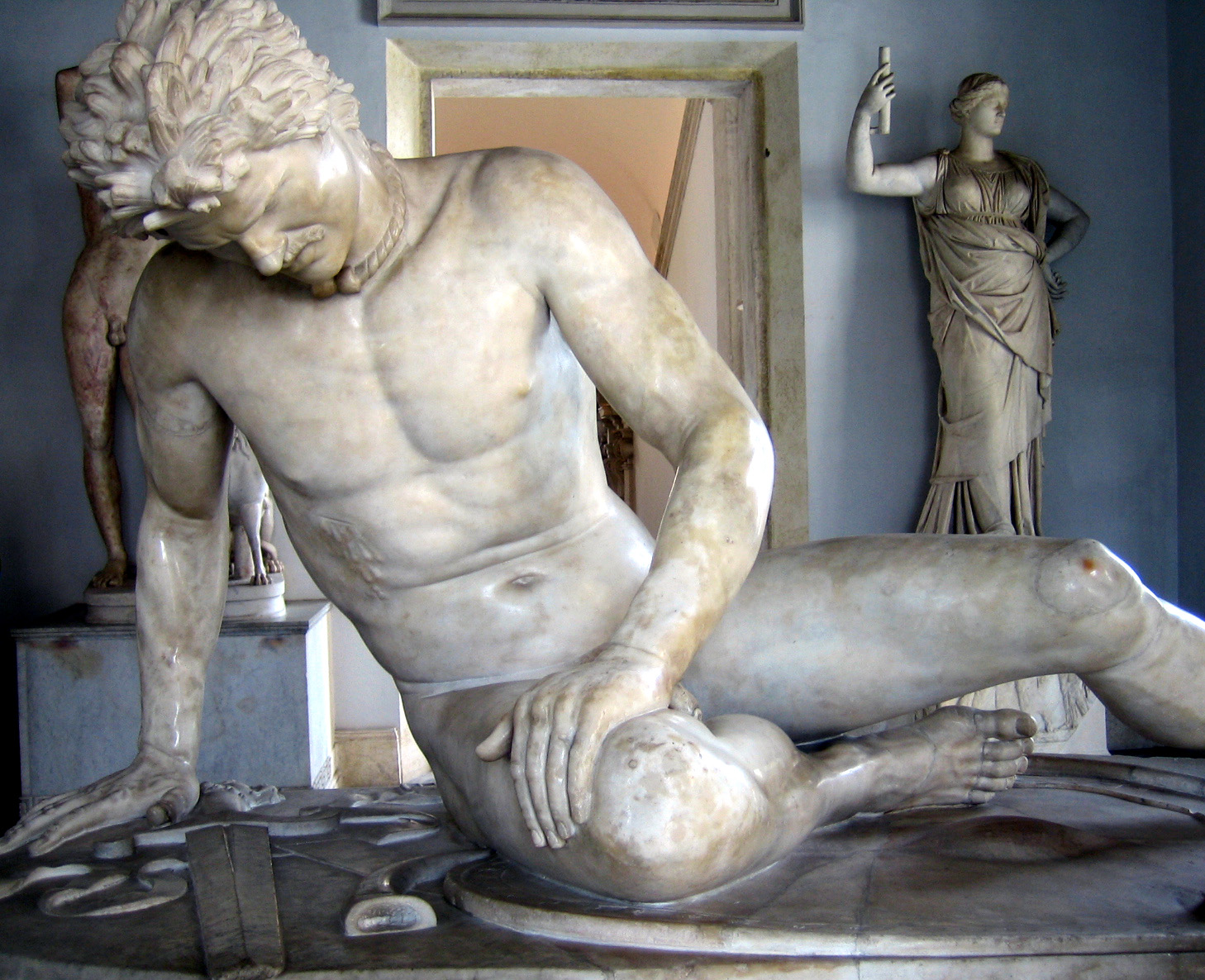
Today in my art history class we visited the Capitoline Museum. It was nice since we've been running all around the city of Rome to finally stay in one place and see so many amazing things. We got to see the original bronze statue of Marcus Aurelius (the copy is in the center of the square) and a few other bronze statues. Only a few because the rest were melted down during a time when bronze was more important than the art.

We also saw the remains of the Colossus of Constantine--the head, right hand, feet, a leg, a kneecap and an elbow. Even with only those parts you can imagine just how huge the statue must have been. And of course we had to see the bronze she-wolf nursing the (added later) twin babies (Romulus and Remus).

My favorite one was the Dying Gaul though. I think because it's not just a statue of an emperor or someone posing for a portrait, it's telling a story and there is a lot of emotion in the statue.

The common theme, though, was that historians are for the most part unsure where most of these statues were originally located in Rome. They have been moved around, reconstructed, lost, found and who knows what else. It gets kind of confusing in class when my professor says "Well, it's here now, but it was in the Campus Martius we think" or "And those statues were originally in the temple dedicated to Castor and Pollux but not the one we learned about in the Forum, another one near the Tiber..." There are so many things to remember!

In other news, I got an A on my Italian midterm. Apparently I understand it better than I thought! I haven't gotten my stats midterm back yet, though; that I'll get tonight...and that's the one I'm nervous about. That and this social research methods one due tomorrow. That deserves its own blog, really. It only has four questions but they can get pretty intense. Especially since it's meant for political science majors in their senior year, preparing for their theses and I am just about the furthest thing from that.

I'll get it done, though. He said we could do outside research for it, since it is a take-home, something I've had to do since I don't know enough about the crisis in Darfur or the economic situation in China to talk endlessly about them (like my professor can...it makes my head swim sometimes).

But enough about that, I've got to catch the tram for stats class. If I passed my midterm I'll let you know!

Friday, March 6, 2009

Happy Birthday Michelangelo!

Today is Michelangelo's birthday; he was born in 1475 in the Tuscany region. His works are found all over the world, but at the age of 21 he came to Rome and that is where some of his most famous pieces/architecture resides. So what did I do to celebrate this occasion? After a breakfast of banana pancakes, I headed into the city to check out some of the pieces Michelangelo is known for in Rome.

I've seen St. Peter's Basilica already, (and La Pieta inside) but that is perhaps the most famous of Michelangelo's architecture, especially the cupola. I've also been to Palazzo Farnese, home of the French embassy, and the Capitoline Hill (though that one I visited again--it was on my way during my wanderings this morning).

My first stop was Santa Maria sopra Minerva, located just behind the Pantheon. From the outside it doesn't look like much, but don't let that fool you. Santa Maria is gorgeous inside, with high ceilings painted a deep blue and marble everywhere. Numerous side altars lead up to the high altar and to the left there is a statue of Christ Carrying the Cross. It's also known as Christ the Redeemer or Christo della Minerva and was carved by Michelangelo in 1521. The figure was originally nude, but during the Baroque period a covering was added. The first thing I noticed was how calm and ready Christ looked, even though he is holding the things that will kill him. The statue is supposed to show his willingness to die for us.

After a few extra minutes walking around the church in awe of its greatness, I started for my next stop: Basilica dei Santi Apostoli. None of Michelangelo's works are found here, but this is the church that housed his tomb for a while before it was moved to Santa Croce. Anyways, it was worth going to if only to see the fresco above the sanctuary, the Fall of Lucifer and Rebel Angels. It's an illusionist painting so it looks like the angels are falling out of the painting, out of the ceiling, and into the church.

Next I made my way through the Piazza del Campidoglio, designed by Michelangelo between 1536-1546. Instead of having the square face the Roman Forum, Michelangelo turned it around to face Papal Rome and the stairs leading up to it are meant to show the link between the new and old Rome. Because of the odd shape of the square, Michelangelo had to be creative in order to make it feel as though the buildings were symmetrical and that a person standing in the square felt like they were on top of the world. It's actually egg-shaped and the slope is off, but of course Michelangelo pulled it off.

After a quick walk past the Roman gladiator who always asks for a photo outside the Forum and up Via Cavour, I found myself at my last stop of the day, San Pietro in Vincoli (St. Peter in Chains). This church houses the relic of the chains said to have bound St. Peter when he was imprisoned in Jerusalem. They keep these chains in a shrine under the altar. When I was at this church, so were a few Italian school tours, so I had to weave through them to get pictures of the reason most of us were there: Michelangelo's statue of Moses. The statue is flanked by slightly smaller statues of Leah and Rachel. The entire work was supposed to be much larger and was for the tomb of Pope Julius II but the pope interrupted Michelangelo's work for unknown reasons and it was gradually scaled down to what we see today. It is still quite impressive, with Moses looking fierce holding the tablets with the commandments, his beard down to his chest and horns on his head. (The horns have something to do with the biblical story--Moses having rays of light coming from his face. I guess the horns were meant to show that, and were easier to carve than a ray of light would be.)

The trees on our street are starting to bud and the weather has been gorgeous (besides the lingering rain)...hopefully spring comes to Wisconsin soon as well!

Thursday, March 5, 2009

Colosseum

Alright, I should be studying for the Italian midterm I have in 2.5 hours (or the Stats midterm I have later tonight) but here's a quick note updating you on my art history course this Tuesday.

We started out by the Colosseum's metro stop and from there went up the Palatine to see the Flavian Palace (it's not so much a palace as the ruins of a palace these days). Then we came back down and got to go inside the Flavian Amphitheater...better known as the Colosseum.

I knew we would be going inside sometime during the class, so that's why I haven't gone in on my own. We had to be kind of sneaky since they don't really let unofficial tour groups inside (tour groups including classes like ours) so our teacher hung out at the back of the line as we walked through nonchalantly until we got all the way in. I guess they do it to guard against phony tour guides.

Of course I knew from the outside that it was huge, but you can't really appreciate it until you are inside. I posted my photos already (they are at the end of the album) and those give you some sort of idea of what it's like. I sometimes feel silly because I am usually the only person taking photos during class, but I paid for the class, I might as well take the photos. I don't know if the other students just don't care or if they have already been to these places and taken pictures. It's kind of funny because I'll usually stay behind at a site to get another photo and then I'll have to rush to catch up to the class. I'm sure they make fun of me. (I'll let them...it's their loss, right?)

That was my excitement for the week, seeing as after that I had 4 midterms to prepare for. One is done, two I have today, and another is a take home due next Wednesday. And speaking of midterms I'm going to get back to the studying!!

Saturday, February 28, 2009

Taking a Break from Studying

Oh, it's been a busy week here in Roma!

Tuesday: We walked all over Rome in my art history class--from the Colosseum to the Forum to the Pantheon to the Mausoleum of Augustus. Class got out late, which isn't normally a big deal except when you are a few miles from home and you have class in an hour...and the buses are not running their normal routes due to a service sector strike in Trastevere.

That's right, the Italian workers in the service sector (from what I read it was mostly people who clean/maintain schools, hospitals, etc) decided to go on strike on Tuesday in front of a public ministry building in Trastevere. There were mobs of people and carabinieri all around, causing a disruption in traffic down Viale di Trastevere, the main street that gets me from my apartment to everywhere else in the city. So I had to walk nearly 3 miles home and miss my next class.

I had another class later that day, at 6:45, and Marina and I figured by this time the people had to have left. We were wrong. The tram took us part of the way, but we had to get off early since the strike was still going on. It looked like it had gotten bigger actually. We started to walk through it, dodging all the people clustered in groups in front of the building, until we got to the other side...and were faced with a line of carabinieri holding their big shields out, not letting anyone through. A few people were getting through, though, by pleading their cases to the carabinieri. Marina and I approached one with our John Cabot IDs in hand. At first he shook his head no, then looked around him and shifted over just slightly. Just enough for us to squeeze through.

When we got out of class at 8, the mob was gone. The tram was running again, and things were back to normal on Viale di Trastevere, as if nothing had happened. The only proof of it was all the trash, cigarette butts, and a few extra protest signs and flags lying on the sidewalk where they had gathered.

Wednesday: Nothing too out of the ordinary today. In my social research methods class we had to explain to the class the topics we chose for our thesis papers. There are only six of us, so it didn't take long. The other girls are doing things like: the link between economic recession and conservative government, what is justice/is justice an international concept, feminism and emotional management/mechanization of the body, etc... Then when it was my turn I threw out my concepts: storytelling and healing. More specifically, using storytelling to heal or healing through narrative. I've found a few articles on the topic so I know I'll have plenty to write about. The other girls thought this was interesting, but they wanted to know what my major was. When I said English, creative writing, they were all like "Oh, that makes sense..." I guess they are all political science/international law/business majors who have to take this class for their majors. As a sociology minor I also have to take the class, though my focus is obviously a bit different than theirs!

Thursday: Today I went on another high school visit. This time it was Liceo Plinio, located more near the center of Rome. I found it without trouble. This liceo is smaller than the other one, only about 600 students, so there was only the one building and I could walk right in. As soon as I got inside, the lady in the front office pointed to me as asked "Americana?" I nodded and said "si" and she pointed me down the hall to another lady, Paula Berna, the teacher I would be shadowing.

I was only there for one class this time, a class of last years. We did something similar to what I did at Liceo Farnesia, with the class asking me questions about America and my life, but at Liceo Plinio the class was much more interested and less chaotic. They would ask where I was from, what the main source of revenue was in my state, etc. and as I would answer Ms. Berna would ask me to write certain words on the board (Rachel, Wisconsin, creative writing, deer, farm, copper/cop, heat and air conditioning, hail) that the students would copy as vocabulary. They filled the hour easily with their questions and I got to ask some of my own at the end.

I would say what surprised them most about my description of life for a teenager in America is how long the day is. I talked about some high schoolers who go into school early, have school from 8-3:30, and then have practice for sports/clubs until 5 or 6, or others who have jobs along with school. They couldn't even imagine that. In Italy, the school day generally goes from 8 until noon or at the latest 2. After that, they go home and have a big lunch with their family and maybe work on some homework or hang out with friends in the afternoon.

When I was done there it was the end of the school day, so I had to make my way out of the school in the midst of hundreds of Italian teenagers...that was a cultural experience in itself!

Friday: I don't know why, but for some reason Marina and I got up at 8 this morning. We made a quick run to the market for eggs, milk, and some vegetables and came back to make ourselves breakfast. We had omelets with peppers and onions, fried potatoes, and fruit along with our coffee and orange juice. We really couldn't have had a more American breakfast, but it was so good.

Then we headed out to see Villa Borghese. It was such a nice day so we walked most of the way, up Via del Corso to Piazza del Popolo. There we took a break for some pictures of the piazza, of the twin churches (see them in Angels and Demons!), and for a breathtaking view of Rome from above the piazza.

Then we walked into Villa Borghese, amazed at all of the grass and clean air. The villa is huge, like a giant park with cafes, open fields, a zoo, and museums. Our destination was the main art gallery. We got there at about one, but the only tickets left were for a five pm viewing. The way it works is you buy your ticket for a specific two-hour time slot, starting at 9 am and going until 7 pm. So we had four hours to spare and a beautiful day stretched out before us. We laid out in the sun for a bit and walked around some more, exploring the rest of the villa. When we got hungry we grabbed a snack at the art cafe.

Finally it was our turn to go in. Villa Borghese is full of amazing statues and paintings--some of the most famous by Bernini and Caravaggio. We saw David, Apollo and Daphne, and Pluto and Prosperpina all by Bernini. I loved having Marina there, since she is learning about all of these statues in her art history class. She is like my own personal tour guide. Our favorite Caravaggios were Madonna of the Palafrenieri and Sick Bacchus.

By the time we were done and made it back home it was almost 8. We had been gone all day, but it was such a fulfilling day. We really couldn't have asked for more!

Saturday: Okay, maybe there is something we could have asked for...some more time to start studying for midterms. Midterms are next week--I have four. Since we didn't really do any homework yesterday, Marina and I are playing catch up getting in all of our studying. Rosanna, Shannon, and Stephanie are also pretty busy with studying so today is a chill day here in the apartment. We will make dinner later since tomorrow is Ro's birthday and we've decided to celebrate today. I think what everyone is most looking forward to is dessert: cake and ice cream, Italian style. Which of course means gelato and whatever we can find in the grocery store that most resembles cake.

So there it is, my crazy week. I'm hoping midterms aren't too stressful and that things will settle down a little after they are over (at least until finals creep up). News from home has also been keeping things exciting here: my acceptance into Summer Project at North Myrtle Beach, South Carolina (more on that later) and knowing I'll have visitors at the end of my program (Mom, Donna, Grandma, and Ruth)! Lots of things going on, but my history notes are calling me!

Wednesday, February 18, 2009

Roman Family and Private Life

Today in my Ancient Roman History class I am giving a presentation about Roman Family and Private life (along with another girl, but, as she told me multiple times while I worked on our project, she isn't here to do school...girls like her are the reason I hate group projects). But frustrations aside, I thought I would give you the annotated version.

We've been talking a lot in class about the public lives of Romans and Rome in general, but we haven't really gone into depth about the private lives of Romans--what they did when they were done conquering for the day and went home. Multiple sources have stated that Rome the city was merely an extension of the Roman household and the household was synonymous with the family. So just as everyone under the roof of one house was included in the family, all of the places Rome conquered and annexed were also included as part of Rome. Also, just as the Vestal Virgins had to keep the eternal flame of the public hearth lit, the women of the household had to keep the private hearth lit. Each household also included the household gods.

The houses themselves varied on how wealthy its inhabitants were. Poorer Romans might have small farms in the country or live in the city in small apartments above shops. The wealthier Romans could have a villa in the country as well as a house in the city. These houses of the well-off Romans featured a private area in the back which was windowless and included the bedrooms and other rooms for family use as well as an area in the front of the house which was used for social purposes like dining and entertaining. This front part was more luxurious than the back part. The dining room in Roman houses was located in the middle, between the private and social areas, but was arguably the most important room of the house.

Dinner traditions varied only slightly between rich and poor Romans; the biggest difference was the menu and mealtime entertainment. All Romans treated their houses as their retreats, a place to keep work and home distinct, and as such they respected mealtime. The actual room was set up like a theater with couches arranged on three sides of the table. The fourth side was where the slaves would serve the meal. People ate reclining on their left elbows to show just how relaxed they were. The dinner consisted of three courses or more with entertainment between each course and usually a reading after.

Weddings in ancient Rome were more of a formality than anything. Marriages were arranged to make political/economic ties and the weddings reflected this in their structure. They were basically just a public declaration of intent to live together, since that's all marriage was. Because of this divorce was easy, only a declaration not to live together had to be made in front of witnesses. The resulting marriage after the wedding continued to be the joining of two families and love was not nearly as important as harmony between man and woman. Sex between married couples was only for procreation. The men held the power and the women found value only in being mothers.

As the heads of the households, fathers made most decisions--even the decision of life and death for their children. They might teach their own children in the home or they would hire a Greek slave to tutor them. All in all, though, most men spent the majority of their time out of the household and left it to the women.

Roman women, who were encouraged to become Roman mothers, oversaw the day to day running of the household. Women could read and write but more important were their talents in weaving and spinning. A woman did not have legal status until she bore three living children, more proof that women were only valued as mothers. Sometimes wet nurses lived in the home to help raise the children, both free and slave.

Though procreation was important, Romans also practiced adoption (usually of family members). The free and slave children grew up together in the house and this caused bonds of great loyalty between them. Education in ancient Rome was diverse since most children were taught within the home. It was seen as more of an apprenticeship where the children learned to become Roman so each household decided the specific curriculum. They all learned to read and write while girls also had to learn spinning and weaving and the boys focused more on political and economical studies.

So there you have it. It took me almost an hour to type that all up so I should be good to go for my presentation. I mean, our presentation. Other things planned for today: Marina has a viewing assignment at an art gallery and I am joining her for that and I need to get to bed earlier since I am once again going to try to make it to that high school to speak to the English class there. I got modified directions and printed out some maps so I think I'll make it this time.

Saturday, February 14, 2009

Romanticismo a Roma

Felice San Valentino!

The girls of Via Pascarella 12 had a good Valentine's Day. We're in the city that gives romance its name, how could we not? Marina, Shannon and I shared chocolate chip banana pancakes with powdered sugar and honey for breakfast this morning and Marina made me espresso. Then, being the only ones left in the apartment, Marina and I ventured out.

Our first stop was the pyramid so Marina could see it. Then we walked up to La Piazza della Bocca della Verita to see La Bocca della Verita (The Mouth of Truth). We stuck our hands in and took the touristy picture, like everyone in the line. The tradition is if you tell a lie with your hand in the carving's mouth, it will bite your hand off. While we waited in line, newlyweds pulled up to visit the carving and the church where it is located, Santa Maria in Cosmedin.

Then we walked up the Aventino to peek through the most famous keyhole in Rome. In Piazza dei Cavalieri di Malta, there is a door with two guards and a line of people waiting to peer through the keyhole. Why you ask? Because the view from the keyhole is like magic. You see a row of trees and then an opening which perfectly frames the dome of St. Peter's. It takes your breath away, and the thing is, not many people know about this keyhole. Marina's mom has been to Rome before and told her about it.

Once we got back to the apartment and Ro and Shannon got back we were getting hungry again. Luckily we went grocery shopping this morning so we started making the meal we planned: beef stroganoff and salad. It was so good, even if not traditionally Italian. We did eat our salad last, like they do here. And for dessert we had gelato sundaes with bananas, almonds, and homemade chocolate sauce.

The day didn't stop there, though. Next, Ro, Marina and I decided to go see a romantic movie called Questo Piccolo Grande Amore. The literal translation is "This Small Big Love" but according to Ro, there's not really a way to explain what the title means in English. The film was inspired by a song of the same name by Claudio Baglioni and loosely follows the storyline in the song. Even though it was in Italian, I understood it. I guess I would compare it to Across the Universe, because it was set in the 70s and had a lot of music, etc. It was good, and they even had popcorn there!

And guess what (who, actually) else was there? The one and only Anahel Cimei! We talked on the phone when I got here and have wanted to get together (she's offered to pick me up on her motorino sometime) but haven't been able to see each other because she working on her finals at school. And then tonight at the movie theater we gave our tickets to the girl who I instantly recognized as Miss Anahel. We were so surprised and it was completely random--I had no idea she worked at the movie theater! We couldn't talk long since she was working, but we got to do a little catching up and share the traditional two kisses on the cheeks.

One last thing about the movie: halfway through the screen went black and then the word "intervale" flashed on. The lights came up and a guy came in selling concessions. Yes, Italians have intermissions during their movies! It was just long enough for the guy to sell a few more drinks, and for the Italians to smoke a cigarette, then the movie continued. It was weird, but at the same time I'm really not surprised. Of course they would have an intermission in a movie.

And that was our Valentine's Day. St. Valentine is apparently from Rome, but they don't really pull out all the stops like America does. We saw a few balloons and flowers around town, but other than that they keep it low key, as did we.